Fireplace Chimneys
A technical guide to chimney draw, flue routing, height, fuel, and maintenance principles that affect whether a fireplace works properly.
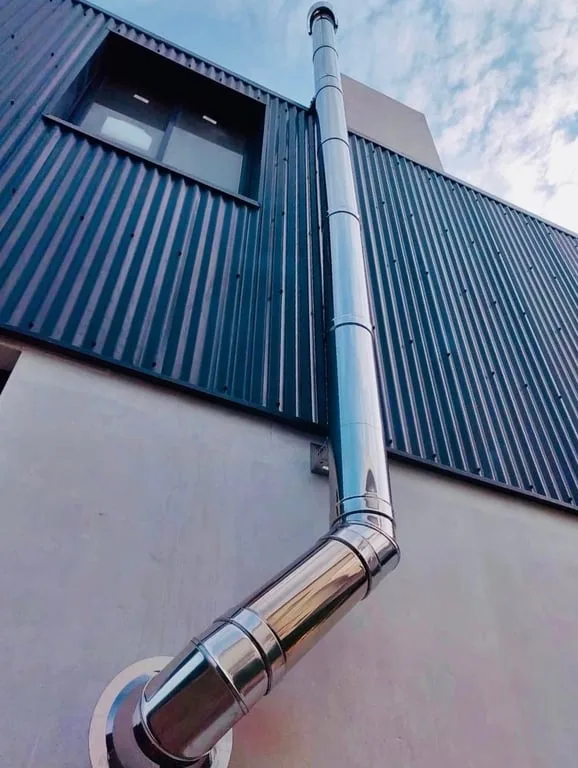
Before choosing parts
Start with the fireplace, the room, and the route through the building. The right flue system depends on height, bends, roof position, wind exposure, and whether an old chimney needs a liner.
Draft makes the fireplace work.
Chimneys are not just a pipe above the fireplace.
A good fireplace installation depends on the chimney as much as the appliance. Height, temperature, route, and air pressure all affect performance.
- Draw needs heat
- A warm, correctly sized flue creates the upward movement that carries smoke away from the room.
- Route adds resistance
- Long horizontal runs, tight bends, and poor appliance connections make the chimney harder to sweep and harder to draw.
- Position changes pressure
- Rooflines, wind exposure, nearby walls, and trees can create pressure zones that push smoke back down.
- Fuel affects the flue
- Wet wood burns cooler, creates more soot and creosote, and can make a sound chimney perform badly.
Create reliable upward movement
Chimney draw
Successful chimney draw depends on hot air rising through a correctly sized and positioned flue. The chimney must maintain enough temperature difference and height to pull smoke upward. In adverse air-pressure conditions above 1018 hPa, when pressure is very high, air can flow back through the chimney into the house. Coupled with high winds, this can cause draft issues and may require pre-heating the chimney before use.
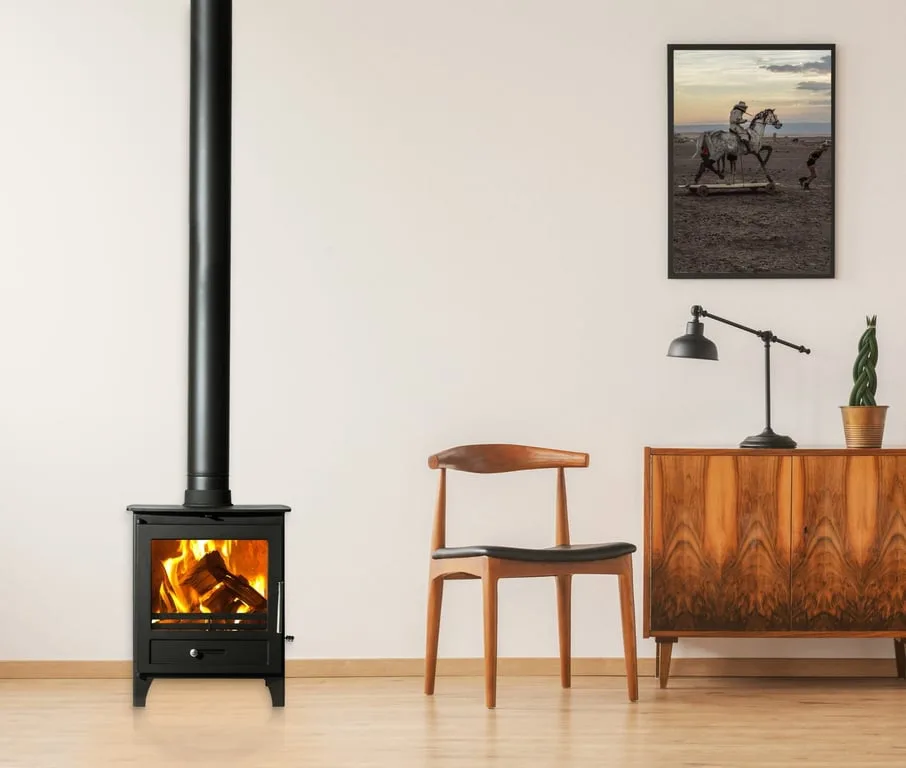
Poor draw can cause smoke spillage, difficult lighting, and weak combustion. The appliance may be blamed, but the chimney path is often the real cause.
- Appliance and chimney work together. Plan the chimney as part of the fireplace system, not as a separate finishing detail.
- Old chimney routes need checking. Stainless steel flexible liners can improve older chimney installations where the internal chimney route is unsuitable or difficult to seal.
- The final route must stay serviceable. Liners help create a more predictable flue path, but they still need correct sizing, connection, and termination.
Flexible liners are a correction, not a shortcut.
The liner should be treated as part of the appliance system and inspected with the rest of the chimney. The right liner improves predictability, but poor sizing or a weak connection simply moves the problem higher up the chimney.
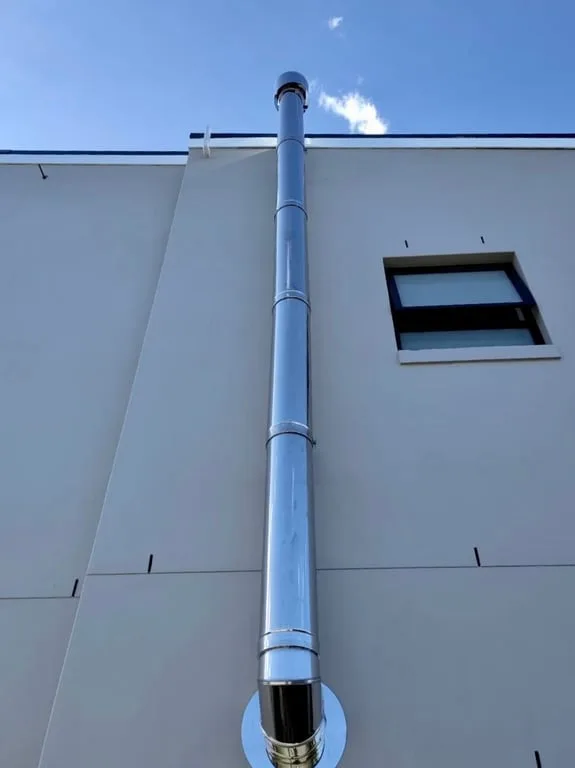
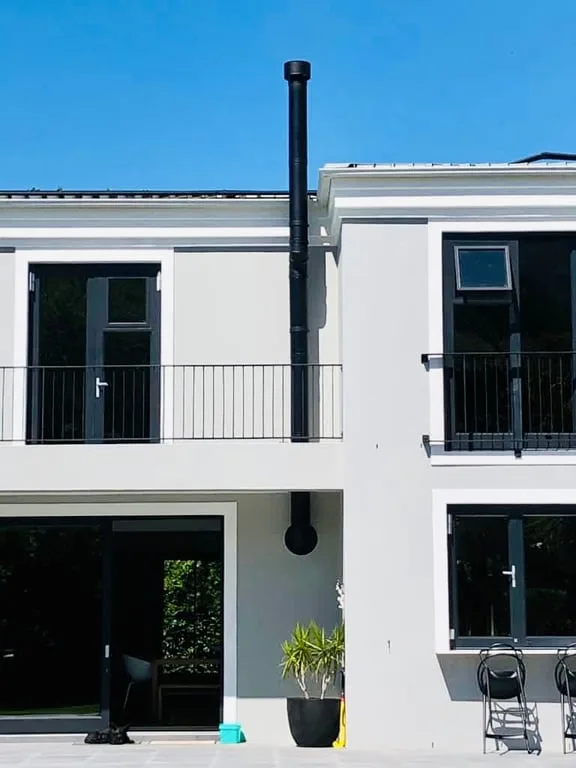
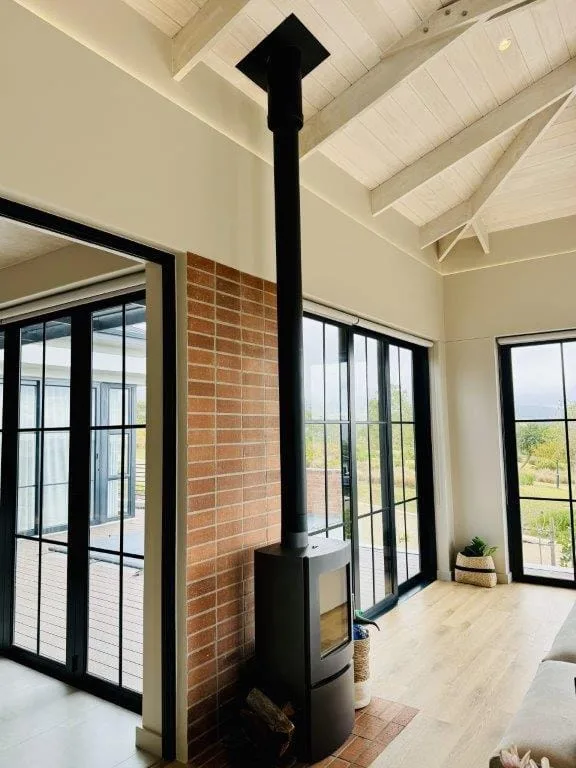
Flue parts are chosen around the route.
Single-wall, double-wall, stainless, and black-finish flues each solve a different part of the installation. Start with the appliance and building route, then choose the parts.
- Keep the flue column warm
- Chimney draw is driven by temperature difference. A cold, oversized, or exposed chimney route can struggle until the flue warms properly.
- Size the liner correctly
- A stainless steel liner can help an old chimney, but only when the diameter, connection, and termination suit the appliance.
- Plan bends before installation
- Every bend adds resistance. Keep bends limited, gentle, and accessible enough for inspection and sweeping.
- Treat minimum height as a start
- Height guidance is useful, but roof shape, wind, and surrounding structures can still require adjustment on site.
Position and height decide whether the system behaves.
Chimney position affects draw. Nearby roofs, walls, trees, and wind exposure can create pressure zones that push smoke back down the flue. Height matters because a taller warm column of air generally improves draft. Minimum heights should be treated as starting points, not a guarantee of performance. Where bends are unavoidable, keep them limited and gentle. Every bend adds resistance and can make sweeping more difficult.
Chimney questions worth asking early.
Wet or unsuitable fuel reduces flue temperature and increases soot and creosote. That makes the chimney dirtier and can affect safety. Regular inspection and cleaning are part of correct fireplace ownership. Soot, nests, corrosion, and damaged liners should be caught before the fireplace is used heavily.
- Why does a fireplace smoke into the room?
- Smoke spillage is often a chimney problem rather than an appliance problem. Common causes include a cold flue, not enough height, poor position, too many bends, obstructions, or wet fuel.
- Will a stainless steel liner fix an old chimney?
- It can help when the old route is unsuitable, rough, leaking, or difficult to seal. The liner still needs the correct size, connection, support, and termination.
- Are bends in a chimney always bad?
- Not always, but each bend adds resistance and makes cleaning harder. Keep bends limited and gentle, and avoid making the appliance connection more complicated than necessary.
- How often should the chimney be inspected?
- Inspect and clean before heavy winter use, especially after wet fuel, poor burning, or a long period without use. Final service timing should be confirmed with the installer for the specific system.